
Mark Rober Egg Drop And Extreme Science And Space Physics Explained
Science looks very clean and easy in textbooks. Real science is completely different. It is messy, loud, and full of broken parts. Many folks remember doing simple gravity experiments in middle school. Students usually wrap a raw egg in bubble wrap. Then they toss it off the school roof. Most of the time, the shell smashes into pieces. A yellow mess covers the sidewalk. It is a fun game for a Tuesday afternoon. But some engineers take this simple game much further.
When a former space engineer gets involved, the rules completely change. The Mark Rober egg drop experiment is a perfect example of extreme science. The goal was no longer just a flat school roof. The target was the very edge of outer space. People thought this idea was completely crazy. Space is incredibly hostile to delicate things. The temperatures up there are deadly. The fall back down is impossibly long. Engineering something to survive that kind of drop takes serious skill. It requires a lot of math. Late nights and pure stubbornness are also required. This project showed the internet what real problem-solving actually looks like.
The Crazy Idea Behind A Space Fall
Taking a fragile grocery store item to space sounds like a joke. The science behind it is very serious, though. The plan required sending a normal egg up on a weather balloon. Weather balloons go much higher than commercial airplanes. They reach a layer called the stratosphere. Up there, the sky turns totally black. The air gets incredibly thin. The pressure drops to almost zero.
A normal party balloon would just pop immediately. A normal egg would just freeze and crack open. The engineering team had to stop both things from happening. They spent months sketching wild ideas on large whiteboards. They built small test models out of very cheap materials. The process was slow and full of annoying mistakes. Building things for space always takes ten times longer than you expect. Every single detail matters deeply. A tiny mistake in the planning stage means total failure on launch day.
The payload needed to lift the egg. It had to keep the cargo alive. Then, the balloon had to drop it perfectly. That is when the real nightmare begins. The fall back to solid ground is incredibly violent. The object falls through different layers of the thick atmosphere. The winds change direction constantly during the drop. The speed of the falling object increases rapidly. It is a massive headache for any smart engineer to figure out.
Why Gravity Is A Harsh Teacher
Gravity never takes a day off. It pulls everything down toward the dirt with the same steady force. When an object drops, it speeds up fast. This speeding up is called acceleration. On Earth, we have a thick blanket of invisible air. This air pushes back against falling objects. This push is known as air resistance.
Air resistance is the only thing that saves falling objects from total destruction. Without thick air, an object would fall faster and faster. It would never slow down until it hit the ground. When the air pushes up just as hard as gravity pulls down, the object stops speeding up. This top speed is called terminal velocity. The team had to calculate this exact speed.
If the top speed was too fast, the egg would vaporize on impact. The engineers had to design a shape that caught a lot of air. They wanted the machine to act like a giant brake pedal. But there is a huge problem. In the upper atmosphere, there is hardly any air to catch. The egg would fall extremely fast for the first few miles. It would only slow down when it reached the thicker air near the dirt. Gravity does not forgive bad math.
Freezing Temps And Broken Dreams
The cold is an absolute killer up high. Everyone thinks about the fast fall. Few people actually think about the freezing temperatures. At high altitudes, the temperature drops way below zero. It gets much colder than a kitchen deep freezer.
A raw egg is mostly made of water. When water freezes, it expands. If the inside of the egg froze, the shell would shatter instantly. This would happen before the drop even started. The team had to build a life support system for a simple breakfast food. They used special electric heating pads. They wrapped the egg in multiple layers of thick insulation.
Building a heater sounds pretty easy. Heaters need heavy batteries to work, though. Batteries add a lot of weight. Extra weight makes the big balloon struggle to go up. Heavy weight also makes the egg fall much faster on the way down. The engineers had to balance the heavy batteries against the need for warm heat. It was a miserable balancing act. They ran dozens of tests in commercial freezers. Sometimes the batteries died too fast. Sometimes the heater got too hot. It actually cooked the egg. Finding the perfect middle ground was a massive headache.
Building The Ultimate Protection Shield
A soft landing requires a very smart landing craft. The outside shell of the craft had to take the full force of the crash. Cars use special crumple zones to keep drivers safe. A crumple zone is a part of the car designed to smash. It absorbs the deadly energy.
The engineering team built a custom crumple zone for the egg. They used lightweight materials that would snap and bend easily. When the craft finally hit the dirt, the bottom part would crush. This crushing action slows down the sudden stop. It takes the violent energy of the crash and eats it up entirely. The egg sits safely in the exact middle. It remains totally unaware of the violence outside.
- Foam padding: Soft materials wrap the egg tightly.
- Plastic struts: Thin rods that break easily on hard impact.
- Woven fabric: Strong cloth that holds the broken pieces together.
- Nylon parachute: A massive sheet of fabric to slow the final drop.
- GPS tracker: A heavy little box needed to find the craft later.
Every single piece had to be glued. Everything was taped and tested. The team dropped the shield from low heights first. They used small drones and tall ladders. Half the time, the protective shield failed completely. The egg broke everywhere. The team had to sweep up the wet mess. Then they had to start over again.
Scrap Parts Make Great Science Tools
Real engineering does not always require expensive metal. You do not need fancy lasers either. Some of the best tools come straight from the local hardware store. The internet watched as the team used very simple things. They used foam pool noodles. They bought duct tape and plastic bags.
Using cheap parts is actually a very smart strategy. When things break constantly, expensive parts drain the budget fast. Cheap parts allow engineers to test ideas much more often. This clever process is called rapid prototyping. You build something ugly. You break it on purpose. You learn from the mess. Then you build it again.
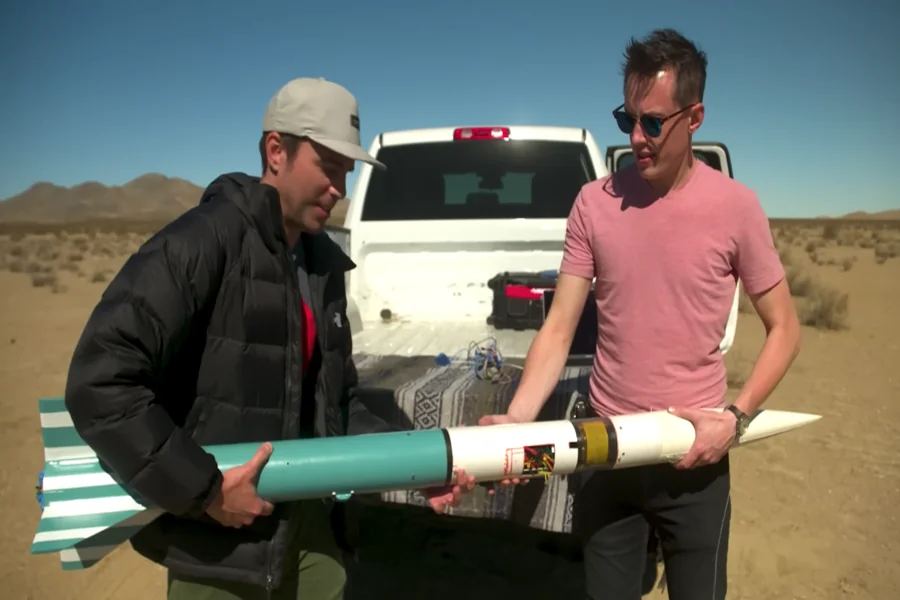
Students watching these videos learn a huge lesson. Nobody needs a million dollars to do good science. A person just needs a working brain and a roll of heavy tape. The craft looked somewhat ridiculous at first. It looked like a giant dart made of trash. Appearance means absolutely nothing in physics, though. Only actual performance matters. The messy dart was actually a masterpiece of aerodynamics. It cut through the roaring wind. It stayed perfectly straight during the fall.
Failing Is Just Part Of The Job
The final video makes the ultimate success look easy. The reality behind the camera was full of total disasters. First, the weather almost never cooperates. Huge wind storms blow the balloons totally off course. Heavy rain ruins the sensitive electronics. The team lost several large weather balloons to high winds.
One expensive balloon popped way too early. The test craft fell into a thick, dark forest. The tired team had to hike through sharp bushes. They waded through deep mud just to find a broken egg. Another time, the release mechanism froze solid in the sky. The egg never dropped at all. It just rode the balloon upward until the balloon burst. These sudden failures are incredibly frustrating. A normal person just wants to throw away their tools. They want to quit completely.
Quitting is not how real science works. The best engineers in the world fail constantly. They document every single failure carefully. They write down exactly what went wrong. Did the thin string snap? Use a much thicker string next time. Did the battery freeze? Move it closer to the hot heater. The final successful Mark Rober egg drop only happened because of a giant mountain of miserable failures.
The Real Takeaway From The Sky
The entire space egg project was a giant, loud spectacle. It was funny and incredibly dramatic. The actual lesson sits much deeper than just a viral video, though. The crazy project proved that the hard laws of physics are perfectly reliable.
Gravity, pressure, and energy always follow the exact same rules. When humans understand those strict rules, humans can do impossible things. Sending a fragile object to the dark edge of space is a crazy challenge. Bringing it back safely is a massive triumph of the human mind. The tools might have been cheap. The thinking behind the tools was world-class. This grand experiment shows everyone a clear truth. Complex problems just need stubborn problem solvers. The sky is never the limit if your math is right.
FAQs
What is the famous egg drop experiment?
It is a science challenge where someone designs a protective container. The container must keep a raw egg from breaking when dropped from a high place.
How high was the egg taken before it dropped?
The engineering team used a massive weather balloon. They carried the payload roughly 100,000 feet into the upper atmosphere.
Did the egg freeze during the flight?
No. The clever team built a specialized heating system. They used battery power inside the payload to keep the internal temperature safe for the egg.
Why did they use a crumple zone?
A crumple zone absorbs the terrible shock of a hard landing. It breaks on purpose. This action keeps the sudden stopping force away from the fragile cargo.