
The Research Trend You Only Notice After You Submit
The acceptance email lands on a Tuesday, and for an hour it feels like the end of a long haul. Then the postdoc opens a journal she has never subscribed to and finds her idea, published by another lab two months earlier. She missed the direction the field was turning, not the paper. WisPaper, an AI academic agent, aims to catch that turn earlier.
What a Field's Citation Density Actually Reveals
A single paper's citations tell you little. The signal appears when references start traveling together, when a method's name repeats across abstracts that otherwise share nothing, the early trace of a shift that shows up in co-citation patterns before any review article announces it. WisPaper reads that signal as the whole problem: separating a brief spike from an actual migration.
Reading the Radar Before the Review Article Exists
Review articles are slow by design; by the time they name a method's rise, the early adopters have moved on. Technology Radar Charts show how quickly a technique is spreading, a migration visible as a shape on a chart months before a review article names it. A researcher who reads only reviews is always reading the past.
When 'Trending' Means Funding, Not Just Fashion
For a lab, trending means matching the methods a funding panel recognizes as current. A proposal built on a technique already cresting gets read differently than one that ignores it. By the time a method is obvious, the funding window has narrowed; spotting the shift while it is still forming changes what a PI can propose.
Spotting the Method That's About to Cross Disciplines
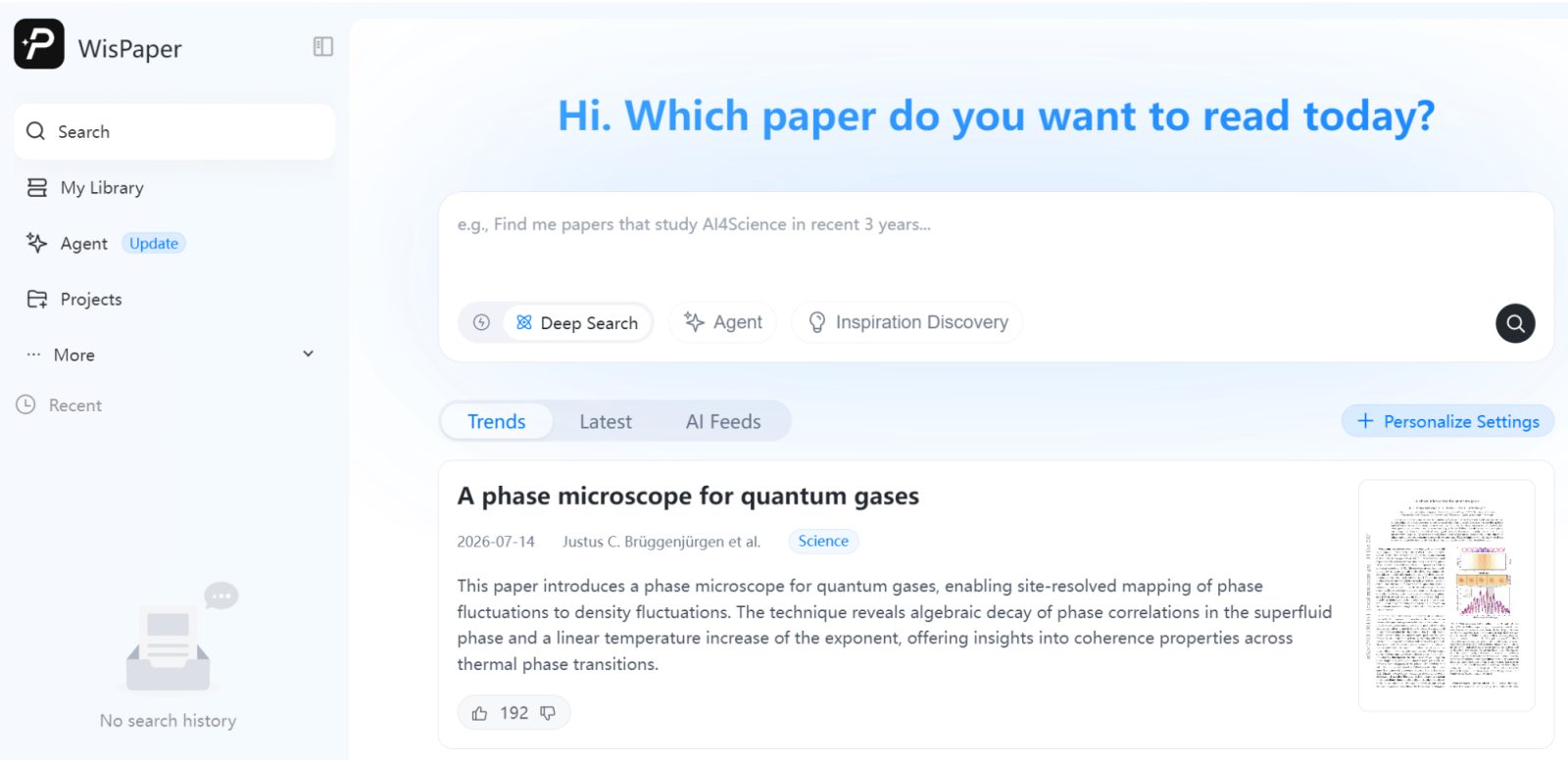
The most useful signal is a method crossing from one discipline into another with its vocabulary attached. WisPaper's AI Feeds watch for that movement rather than a fixed keyword, and Deep Search handles the include-and-exclude logic ordinary search fumbles. An AI academic agent turns a vague fear of being scooped into a set of monitored signals.
Setting an Alert for a Shift, Not a Keyword
A keyword alert tells you after someone has published the thing you were watching for. A shift alert tells you while there is still room to contribute. The postdoc stops finding out about the turn after the fact.
Trend detection keeps moving earlier, from review articles to citation patterns and a method's first appearance in an adjacent field. Researchers who see the turn while it is still soft write the paper the review article eventually cites.