
How to Fill Out a Business Check Step by Step Guide
Knowing how to fill a business check is a vital skill to be possessed by any business owner, manager or an employee dealing with finance. Checks continue to be a very popular payment method even in the digital world particularly when it comes to formal payments, payments to vendors and record keeping.
The way a business check is completed ensures that the payment will be carried out without any complications and allows keeping the professional credibility. Any simple error like writing the incorrect sum or not remembering a signature can cause hold-ups or even financial problems.
This manual will take you step by step through each process in a simple and easy manner that will enable you to do your business checks with a lot of confidence and accuracy.
Understanding the Parts of a Business Check
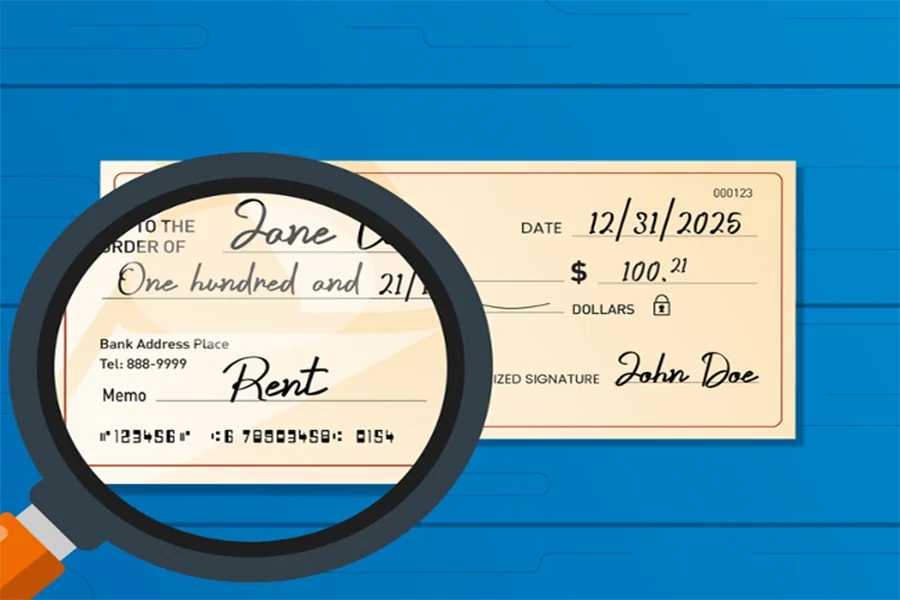
There are various sections of a business check that you should learn before commencing your writing. All parts serve a certain purpose and are known to prevent errors.
The date line will be at the right top corner. This is where you write the date the check is issued.
The payee line starts below the payee line, commencing with Pay to the order of. This is where one writes the name of the individual or company which is getting paid.
There are then two fields of amount. One is a box wherein you place the amount in figures and the other is a line wherein you place the amount in words.
It also has a memo line where you can attach a note as to the purpose of the payment.
Lastly is the signature line, which is signed by the person who is authorized to sign the check and this makes it valid.
Such knowledge of these parts makes things a lot easier and less likely to make mistakes.
Step by Step Process to Fill Out a Business Check
One will fill in business check in a few steps. Having them closely followed guarantees accuracy and professionalism.
Begin by typing the date in the upper right hand side. Use the date of writing the check unless there is a reason as to why you want to postdate the check.
Then, enter the name of the payee on the Pay to the order of line. Ensure that spelling is right and it is the official name of the recipient.
Enter the amount of payment in figures in the given box. Be precise and do not leave space which can be changed.
Write in words on the line underneath then the same number. This is a fallback mechanism in case of confusion with the numeric amount.
The memo line should be used to explain why the payment is being made. An example would be that you can write Office supplies or Consulting services.
Lastly, sign the check on the signature line. The check lacks a signature and is thus invalid.
You should take time with every step to make sure that the check is filled in properly.
Common Mistakes to Avoid
Although it may appear easy to fill a check, there are typical mistakes that may lead to troubles. An understanding of these will enable you to avoid them.
Among the frequent errors is to write down wrong amounts. Always check the numeric and written figures to confirm that the figures are the same.
Another problem is the gap between lines. Unused space is manipulable, thus line should not be left unoccupied or a line drawn in between used space.
The incorrect spelling of the name of the payee may also prone the check to delays or rejection. Always confirm the spelling then write.
Another mistake is to forget to sign the check. An unsignature check is not redeemable.
Handwriting in a poor manner may cause confusion. Use handwriting and write in a clear way to prevent misunderstanding.
Avoiding these mistakes helps ensure smooth transactions.
Tips for Keeping Your Business Checks Secure
Handling business checks is an aspect touching security. Fraud and loss of money in your business can be avoided by taking proper precaution.
Always store your checkbook in a safe and secure location. Have authorized users only.
Use a pen with permanent ink when writing checks. This eliminates any changes and makes the information transparent.
Record all the checks issued. This assists you to trace payments and detect any inconsistencies.
Glance through your bank statements and make sure that everything is correct. This can assist in the early detection of unauthorized activity.
Omitting the spoilt or erroneous checks rather than shredding them. This prevents misuse.
Good security measures will safeguard your business and provide financial stability.
When and Why Businesses Still Use Checks
Even though digital payments are gaining momentum, a check remains one of the most popular payment methods in business dealings. They carry some benefits that render them even pertinent today.
Checks offer a visible paper trail, which will come in handy in terms of record-keeping and accounting. This eases the process of monitoring the costs and finances.
Large or formal payments, like invoices of vendors or rent, are usually preferred to be made with this. Checks are also considered to be a method of security whereby some businesses use them because they are less vulnerable to unauthorized digital transactions.
Also, checks may be convenient in such cases as electronic payment methods are not available or feasible.
Knowing when to use checks will enable you to better manage your business finances.
Final Thought
Learning the art of filling out a business check is a basic skill that all business people must know how to do. It might sound easy, but being precise and mindful of details are necessary to prevent errors and be a professional.
Learning about the components of a check, proper procedures, and pitfalls will allow you to safely make business payments. Security measures and effective record-keeping will also make sure that your financial operations are unproblematic and trustworthy.
Checks are still an essential aspect of business transactions even with the continued development of technology. Understanding how to utilize them correctly gives you more control over your finances, and will assist in establishing trust with your clients and partners.