
Why Vehicle Configuration Matters for Specialized Freight
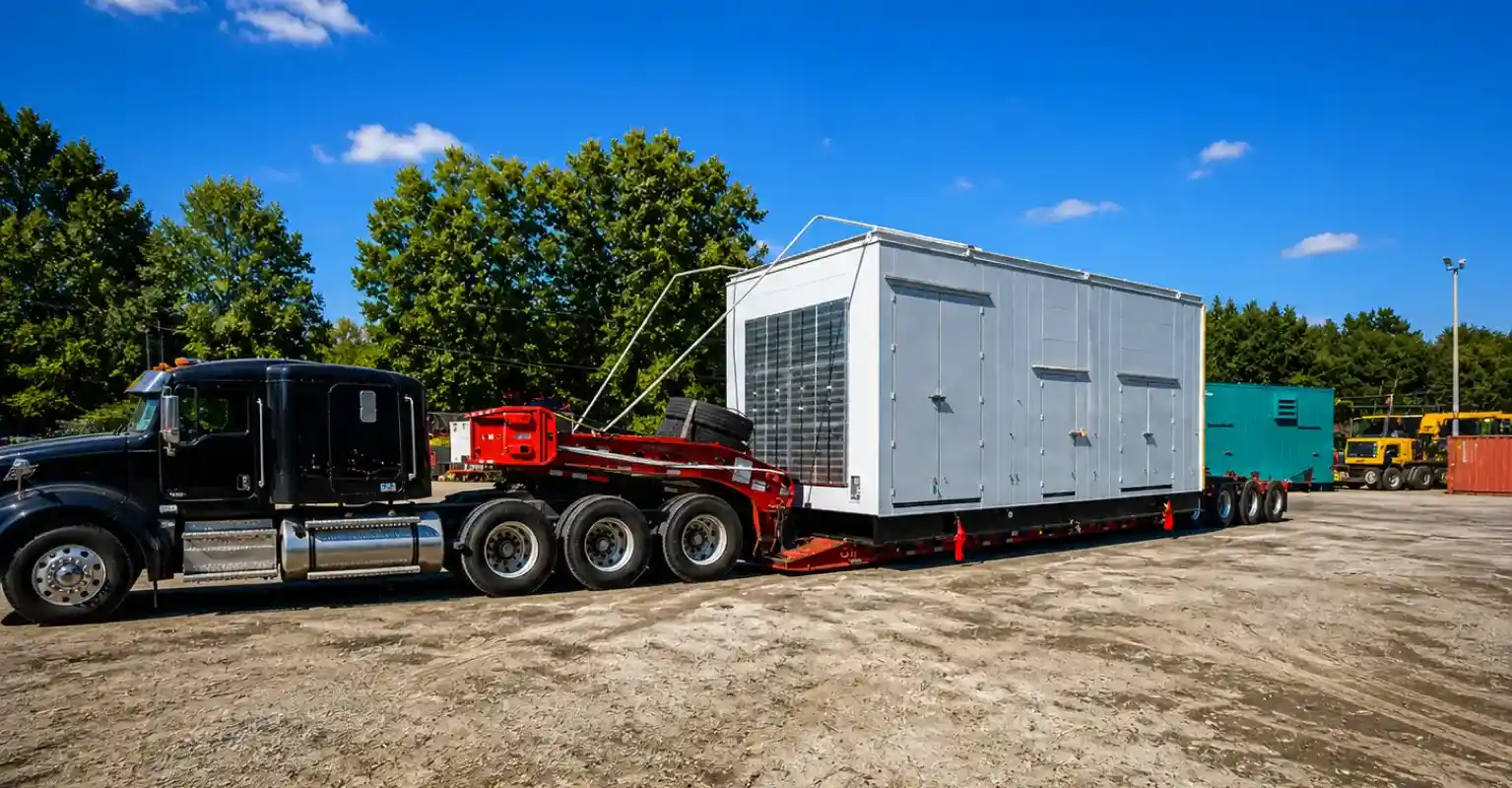
In heavy haul, your equipment isn’t just a vehicle; it’s a high-stakes calculation. If your configuration doesn’t match the physics of the cargo and the realities of the road, you aren’t moving freight—you’re just waiting for a compliance failure. Many operators fixate on engine power, but the real professionals know that success is won or lost in the axle spread and trailer geometry. If those numbers don’t align, the bridge ratings will shut you down, the permit office will block you, and you’ll spend your time stuck on the shoulder instead of hitting your delivery window.
Master the Math of Weight Distribution
It isn’t enough for your trailer to handle the weight of the load; you have to consider how that weight hits the pavement. Bridges operate on specific structural tolerances, and bunching your axles too tightly creates a point load that exceeds those limits.
By increasing your axle spread, you redistribute the pressure across a wider surface area. This is often the difference between clearing a local overpass and being forced into a massive, costly detour. Every state utilizes a specific bridge formula to dictate how much weight they allow between axle groups. If your setup doesn’t fit their math, you won’t secure your oversize truck permits. In this industry, you have to configure your vehicle to the road, not the other way around.
Finding the Balance Between Power and Maneuverability
You can hook up a multi-axle monster, but if you have to thread the needle through a dense city center, you’re going to get trapped on a corner.
Tail swing is the hidden enemy of heavy haul. As your configuration lengthens, your turning radius becomes exponentially harder to manage. You must simulate the turn geometry before you even think about hooking up the tractor. Furthermore, your deck height is just as critical as your weight. Choosing the wrong trailer for a tall load is a guaranteed recipe for a bridge strike. Every inch of clearance matters when you’re dealing with low-hanging power lines and overhead signs.
Leveraging Technology to Manage Risk
The era of relying on intuition, paper maps, and manual calculations is over. Specialized logistics now relies on digital simulation to identify failures before they happen.
If you’re manually crunching axle load distributions for every state on your route, you’re wasting time that could be spent optimizing your operation. Platforms like Omnistar allow you to visualize your configuration, stress-test your load distribution against real-time bridge data, and ensure your paperwork is airtight before the wheels start rolling. It’s the ultimate tool for removing the guesswork from the most dangerous part of the job.
Protecting Your Permit Integrity
Your permit is only as reliable as the vehicle description on the document. When you apply for oversize truck permits, the state requires absolute precision regarding axle counts and spacing.
If you make any changes—swapping a tractor or adjusting your trailer length—after the permit is issued, that document is essentially void. A professional move requires a rigid, total connection between the physical equipment on the road and the legal paperwork in the cab. If they don’t match, you aren’t just delayed; you’re effectively grounded.
Optimizing for Repeatable Success
To keep your specialized freight business profitable, stop reinventing the wheel with every single load.
- Standardize Your Fleet: When you know your standard trailer dimensions and axle spreads, you can develop pre-approved routing strategies that save you hours of administrative headache.
- Prioritize Simulation: It is infinitely cheaper to adjust your trailer setup on a screen than it is to get hung up in a city intersection with a massive piece of equipment.
- Run Rigorous Audits: Check your tire pressure and individual axle loads before leaving the yard. Even a minor discrepancy can lead to a flag at the first weigh station, triggering a delay that eats your entire profit margin.
Horsepower is the cheapest asset in your fleet. The real value is the intellectual capital you apply to your configuration. If you want to keep your operations moving, stop treating the truck and the permit as separate tasks. They are one integrated system—and if one piece of the puzzle is off, the whole thing falls apart.